When planning a new driveway, patio, walkway, or outdoor living space, one of the first decisions is choosing the right surface material. For many homeowners across the GTA, the choice often comes down to interlocking pavers or asphalt paving.
Both options can create a cleaner, safer, and more functional outdoor area. However, they offer different advantages depending on how the space will be used, the appearance you want, your budget, and the amount of maintenance you are comfortable with.
Understanding the differences before construction begins can help you choose a surface that suits your property and continues to perform well over time.
What Is Interlocking?
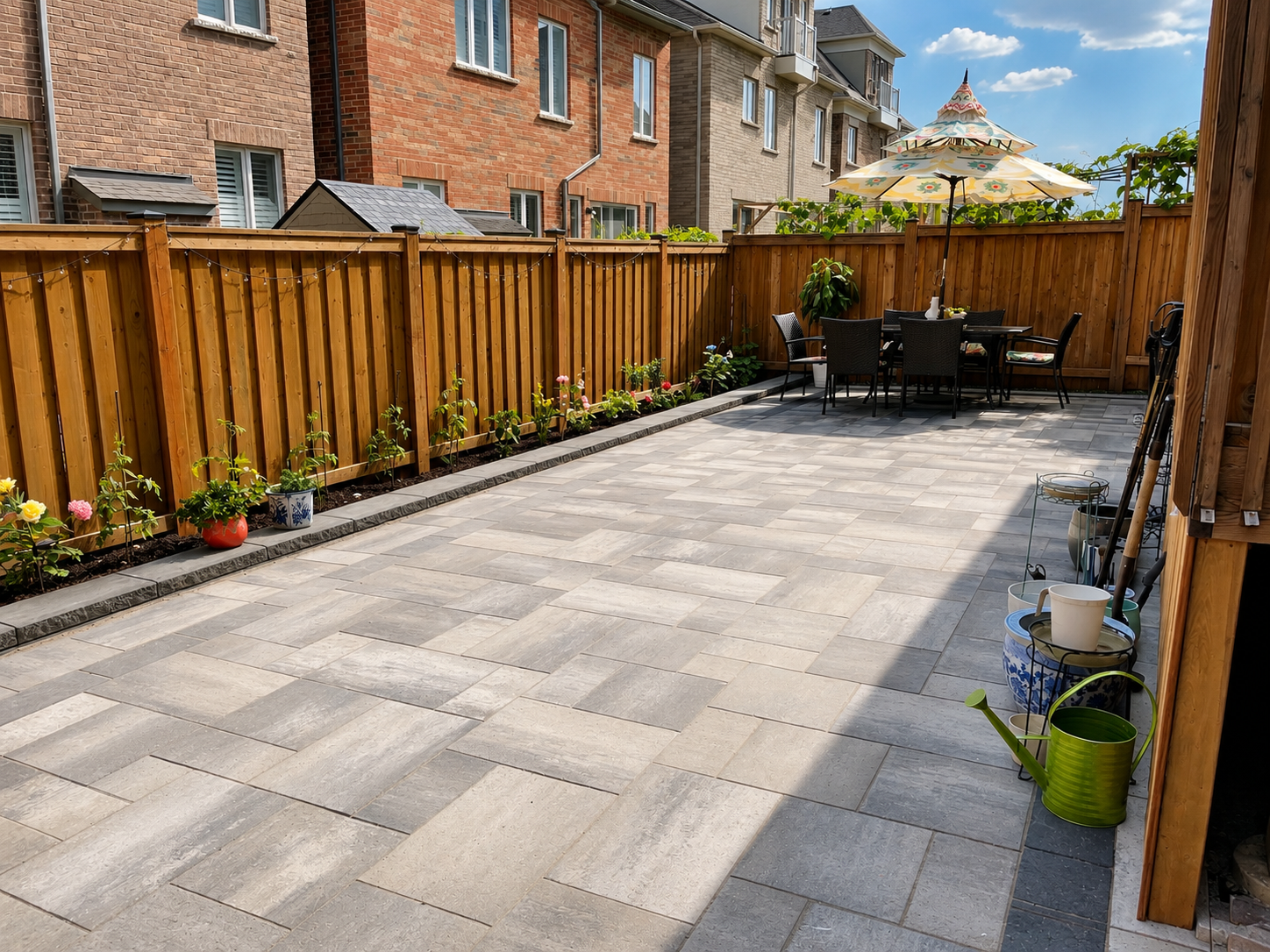
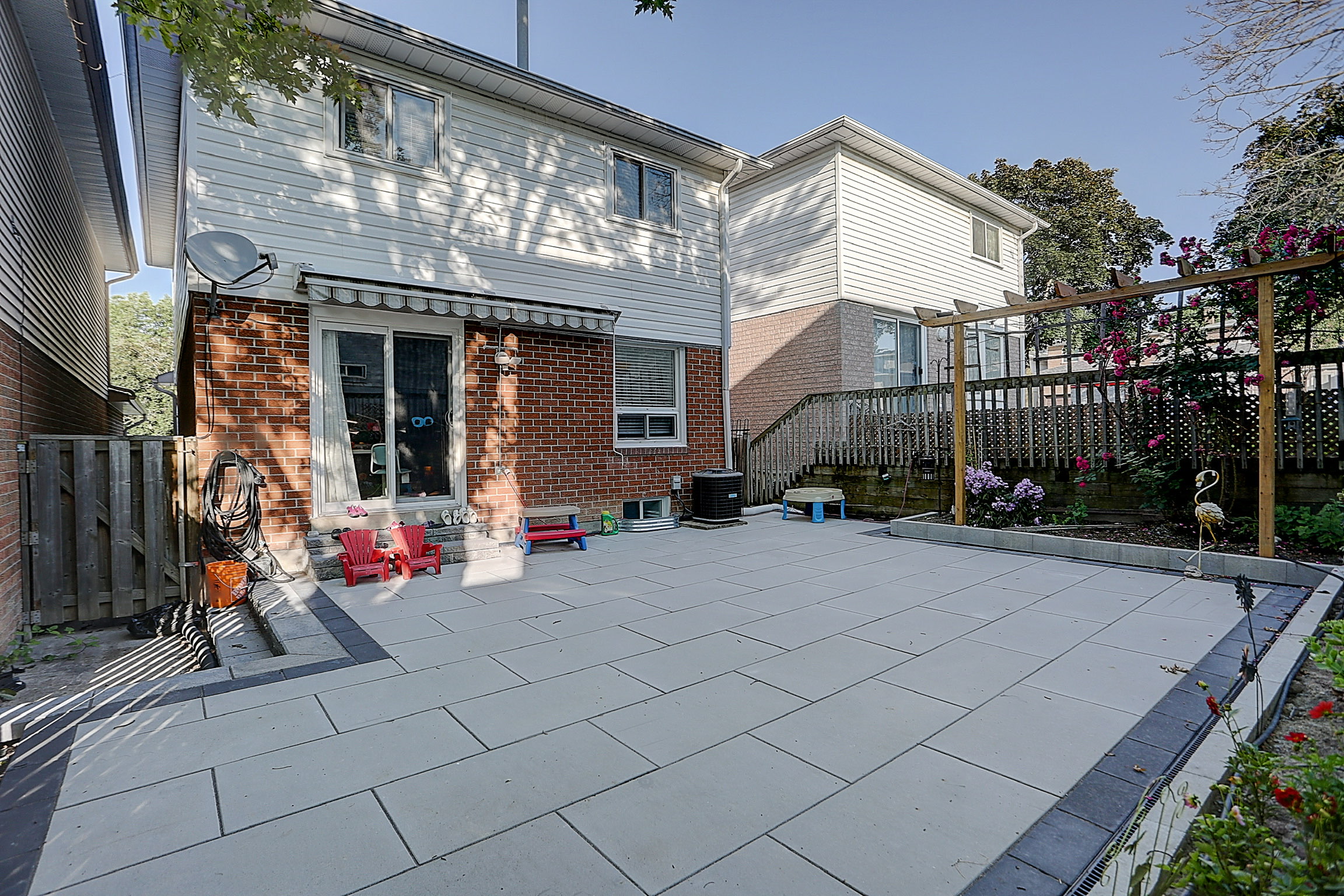
Interlocking uses individual concrete or stone pavers installed in a planned pattern over a properly prepared base. The pieces fit closely together to create a durable surface for driveways, patios, walkways, steps, and outdoor entertaining areas.
Interlocking is popular because it offers many options for colour, size, pattern, border design, and overall appearance. It can be used to create a traditional, modern, or customized look that complements the style of the home.
Because the surface is made from individual units, damaged or stained pavers can often be removed and replaced without rebuilding the entire area.
What Is Asphalt Paving?
Asphalt paving creates a smooth, continuous surface made from a mixture of aggregates and asphalt binder. It is commonly used for residential driveways, commercial parking areas, and larger paved surfaces.
Asphalt is usually chosen for its practical appearance, faster installation, and generally lower upfront cost compared with decorative interlocking.
A properly installed asphalt driveway can provide a clean and functional surface, but it will require periodic maintenance as it ages.
Appearance and Design Options
Interlocking provides significantly more design flexibility.
Homeowners can select from different colours, textures, sizes, patterns, borders, accent stones, and laying styles. This makes interlocking a strong option when curb appeal and visual detail are priorities. It can also coordinate with front steps, walkways, patios, retaining walls, and landscaping.
Asphalt has a simpler and more uniform appearance. It creates a smooth black surface that works well with many homes but offers fewer customization options.
For homeowners looking for a distinctive or high-end finish, interlocking usually provides more possibilities. For homeowners who want a straightforward and practical driveway, asphalt may be enough.
Durability in GTA Weather
Outdoor surfaces in the GTA must handle rain, snow, ice, road salt, temperature changes, and repeated freeze-thaw cycles.
Both interlocking and asphalt can perform well when installed correctly, but their long-term behaviour is different.
Interlocking pavers have joints that allow small amounts of movement between the individual units. This can help the surface respond to seasonal ground movement. If an area settles, the pavers can often be lifted, the base corrected, and the same stones reinstalled.
Asphalt is flexible, which helps it tolerate some ground movement. Over time, however, it may develop cracks, depressions, faded areas, or damaged edges. Small cracks can sometimes be repaired, but larger deterioration may eventually require resurfacing or replacement.
The quality of the base preparation is important for both materials. Even the best surface will struggle if excavation, drainage, grading, and compaction are not handled properly.
Installation and Base Preparation
A durable driveway or patio depends heavily on what is underneath the finished surface.
For interlocking, installation generally includes excavation, a compacted aggregate base, proper grading, bedding material, paver installation, edge restraints, joint sand, and final compaction.
For asphalt, installation generally includes excavation, a compacted aggregate base, proper grading, asphalt placement, rolling and compaction, and edge finishing.
Interlocking typically takes more time because each paver is placed and aligned individually. Asphalt can often be installed more quickly over a prepared base.
However, speed should not replace proper preparation. Drainage and base construction remain essential regardless of which option is selected.
Maintenance Requirements
Interlocking requires occasional maintenance to keep the surface looking and performing its best. This may include sweeping and washing, weed control, replacing joint sand, stain removal, resetting settled pavers, and optional sealing.
Asphalt may require crack filling, patching, sealcoating, edge repair, and eventual resurfacing.
Interlocking can be easier to repair in a specific location because individual stones can be replaced. Asphalt repairs are often more visible because patched areas may not perfectly match the original surface.
Homeowners should consider both immediate maintenance and what may be required several years after installation.
Cost Considerations
Asphalt typically has a lower upfront installation cost, especially for a large driveway.
Interlocking usually costs more because of the paver material, detailed labour, additional design work, borders and patterns, and longer installation time.
However, cost should be considered together with appearance, repairability, lifespan, and property value.
A lower initial cost may be attractive, but it is also important to consider future crack repairs, sealing, resurfacing, or replacement. Interlocking may cost more at the beginning but can offer more design value and easier localized repairs.
The best choice is not always the cheapest option. It is the option that works best for your property, intended use, and long-term expectations.
Which Is Better for a Driveway?
For a driveway, both options can work well.
Choose interlocking if you prioritize strong curb appeal, custom colours and patterns, coordination with walkways and landscaping, localized repair options, and a more finished appearance.
Choose asphalt if you prioritize lower upfront cost, faster installation, a simple and practical surface, or coverage of a larger driveway area.
The driveway size, vehicle use, drainage conditions, slope, and surrounding design should all be considered before making the final decision.
Which Is Better for a Patio?
For patios, interlocking is usually the more suitable choice.
Patios are closely connected to outdoor living and design. Interlocking allows homeowners to create comfortable seating areas, dining spaces, walkways, fire pit zones, and decorative borders.
Asphalt is rarely chosen for a residential patio because it does not provide the same appearance, texture, or design flexibility.
Interlocking can also coordinate with pergolas, outdoor kitchens, garden beds, steps, and retaining walls, making it easier to create one complete outdoor environment.
Can You Combine Interlocking and Asphalt?
Yes. Many homeowners combine the two materials.
A common design uses asphalt in the main driveway area, interlocking borders along the sides, an interlocking walkway leading to the entrance, and an interlocking apron near the garage or sidewalk.
This approach can provide a balance between cost and visual detail.
The materials should be planned together so the heights, edges, drainage, and transitions look intentional.
Questions to Ask Before Choosing
Before deciding between interlocking and paving, consider the following:
- What is the total project budget?
- Is appearance or affordability the greater priority?
- How large is the area?
- Will the surface support vehicles or only foot traffic?
- How much maintenance are you comfortable with?
- Are drainage or grading improvements needed?
- Do you want the surface to match other landscaping features?
- How long do you expect to stay in the home?
A professional site assessment can help identify concerns that may not be obvious from the surface.
Final Thoughts
Interlocking and asphalt paving can both improve a driveway or outdoor area, but they serve different priorities.
Interlocking is a strong choice for homeowners who want design flexibility, curb appeal, repairability, and a more customized finish. Asphalt is a practical choice for homeowners who want a smooth driveway surface with a lower initial cost.
The installation quality matters just as much as the material itself. Proper excavation, grading, drainage, base preparation, and compaction are essential for a surface that performs well in GTA weather.
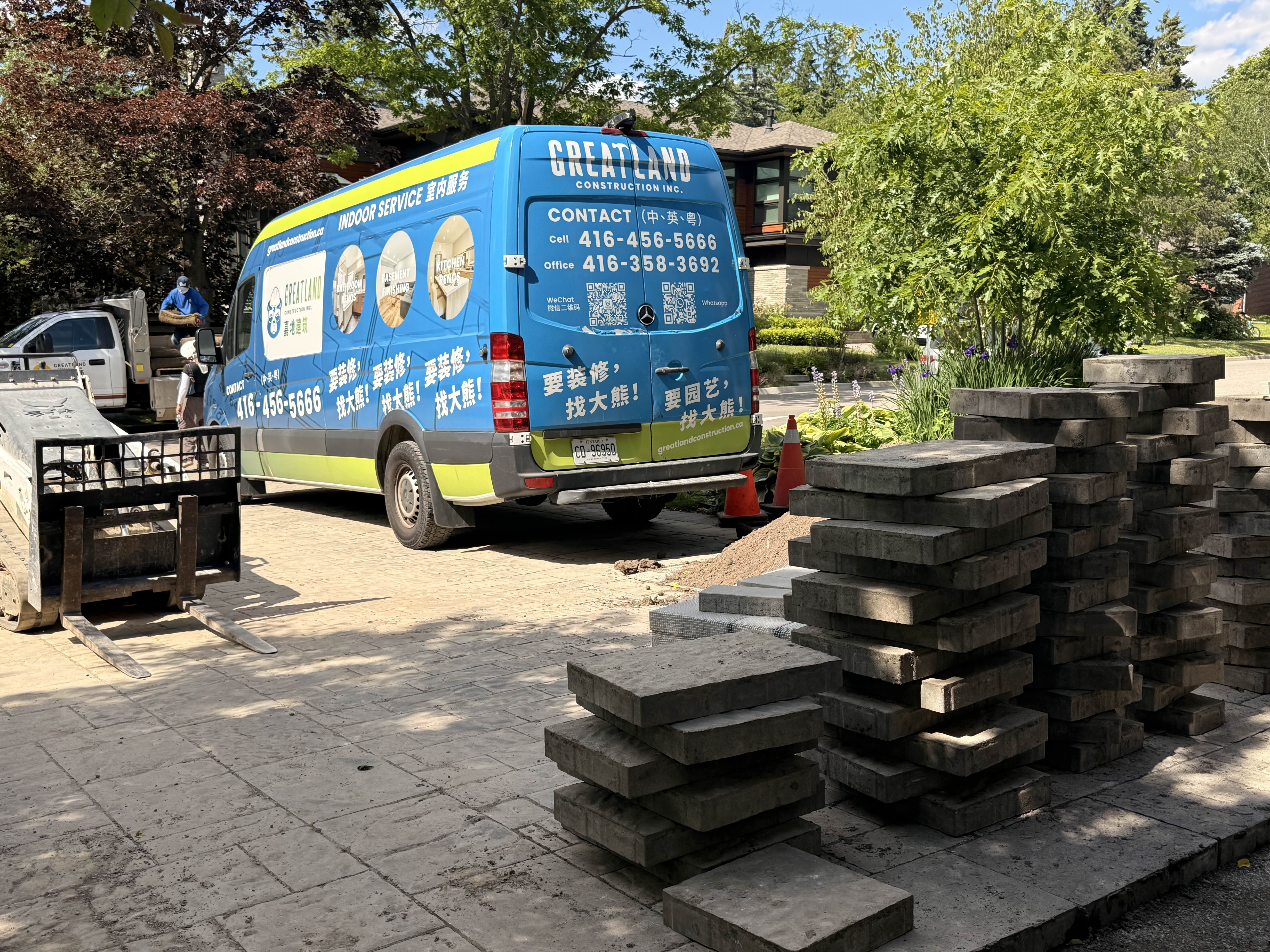
Greatland Construction provides interlocking, driveway paving, patios, walkways, landscaping, and outdoor renovation services across the GTA.