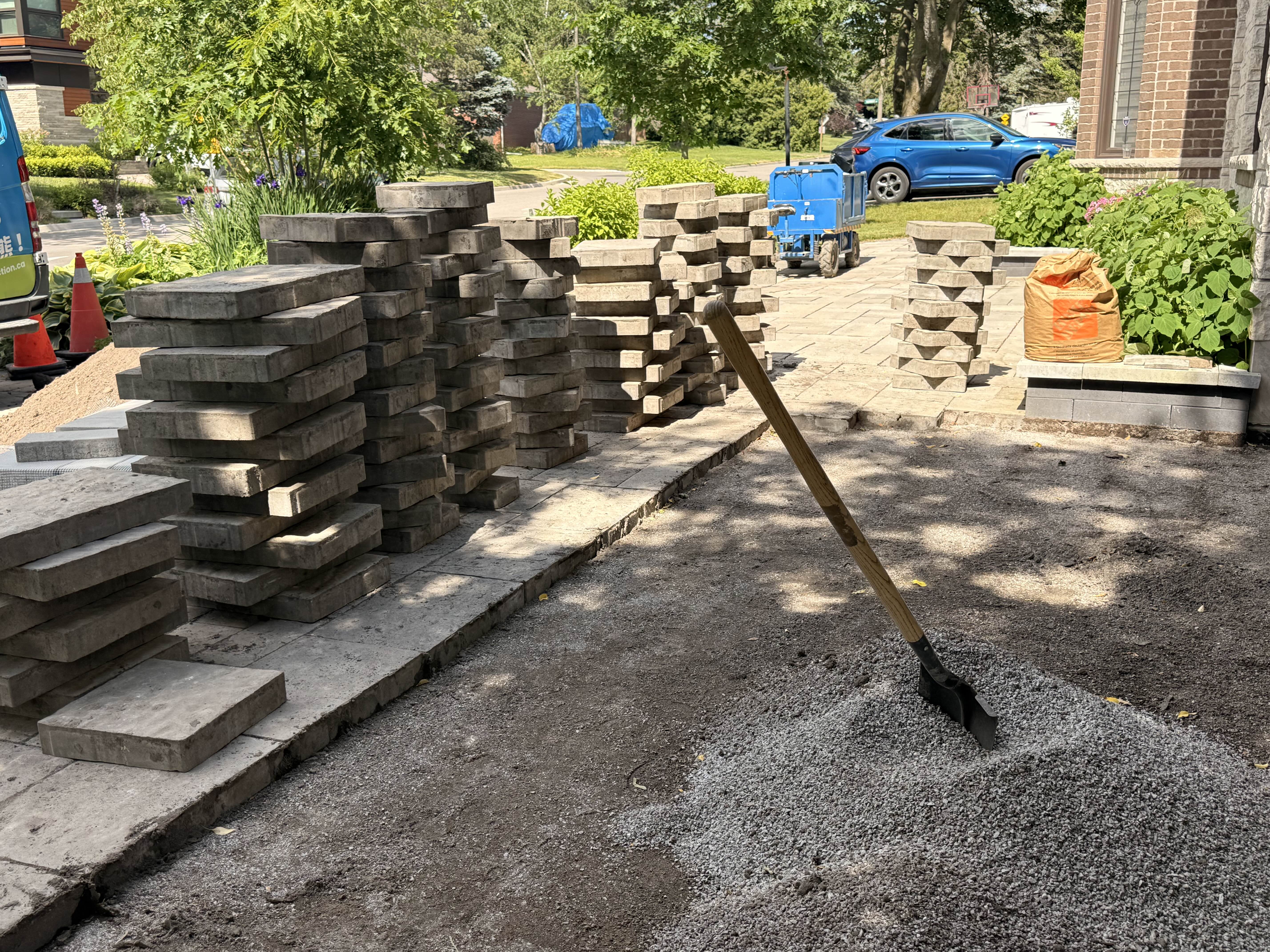
Two of the most common maintenance dilemmas for GTA homeowners are the fence and the driveway. Both weather Ontario's freeze-thaw cycle year after year. Both gradually deteriorate in ways that can be easy to ignore — until the problem is undeniable. And both present the same question: is a targeted repair enough, or is it time for a full replacement?
The answer depends on what you're actually dealing with. Here's a practical breakdown for each.
Signs Your Fence Needs Replacement, Not Repair
Fencing problems range from minor cosmetic issues to structural failures. These are the signs that suggest replacement is the right call:
- Widespread rot: Soft, spongy wood in multiple posts or boards means rot has spread through the structure. You can replace individual pieces, but if more than 30–40% of the fence is affected, section-by-section repairs will cost more than a new fence over time.
- Leaning posts: When posts lean significantly, the foundation (post anchors or concrete footings) has failed. This is a structural issue — fixing the visible lean without addressing the post base won't last.
- Pest damage: Termites or carpenter ants in fencing require complete removal and treatment of affected wood. Partial repairs risk leaving active infestations in place.
- Fence is over 20 years old: If you're doing significant repairs on a fence near the end of its service life, the cost-benefit often tips toward replacement, especially with modern composite or vinyl materials that require far less maintenance.
When Fence Repair Makes Sense
Not every fence issue demands replacement. Repair is the right choice when:
- Damage is isolated to one or two sections in an otherwise sound fence
- Gate hardware is worn but posts and panels are in good condition
- A single post has shifted but the rest of the fence is structurally sound
- The fence is relatively new (under 10 years old) and the damage is cosmetic
Targeted repairs on a sound fence are cost-effective and can extend service life by 5–10 years. The key is assessing the overall condition before committing to a repair plan — if the fence is near the end of its life, repairs are effectively money deferred.
Tip: Before budgeting for fence repairs, check your municipality's fence bylaw. Height limits, material restrictions, and setback requirements vary across the GTA — a replacement fence needs to comply with current rules, which may differ from what was originally permitted.
Signs Your Driveway Needs Replacement
Asphalt driveways typically last 20–30 years with proper maintenance. Concrete driveways can last longer but are more expensive to repair when issues arise. These signs point toward replacement:
- Extensive alligator cracking: A network of interconnected cracks that looks like alligator skin indicates base failure — the sub-grade beneath the surface has shifted or deteriorated. Patching the surface won't fix the foundation problem.
- Multiple large potholes: A few potholes can be patched. A driveway with numerous potholes is signaling widespread structural failure.
- Drainage problems: If water pools on your driveway consistently, the grade has shifted or was installed incorrectly. This damages both the driveway and potentially the foundation of your home over time.
- Age over 20–25 years: An asphalt driveway in this age range, even if it looks manageable, is likely to require increasing maintenance. At some point, the cumulative repair cost exceeds the replacement cost.
When Driveway Repair Is Enough
Targeted driveway repair works well in these situations:
- Isolated surface cracks under 1/4 inch wide — crack filling is effective and extends the life of an otherwise sound driveway
- A single pothole or two in a driveway that's otherwise in good shape
- Surface oxidation and fading — a seal coat can restore appearance and protect the surface
- Edge crumbling — often from heavy vehicles or encroaching vegetation, edge repair is straightforward if the main surface is sound
Getting a Professional Assessment
The honest truth is that many homeowners aren't well-positioned to judge whether a fence or driveway issue is surface-level or structural. A brief site visit from an experienced contractor costs you nothing (at Greatland, estimates are always free) and gives you a clear picture of what you're dealing with.
Understanding the condition of your fence or driveway before committing to a repair or replacement path is the smartest move you can make. It lets you plan the right intervention at the right time — and avoid spending money on repairs that only delay a more costly replacement down the line.