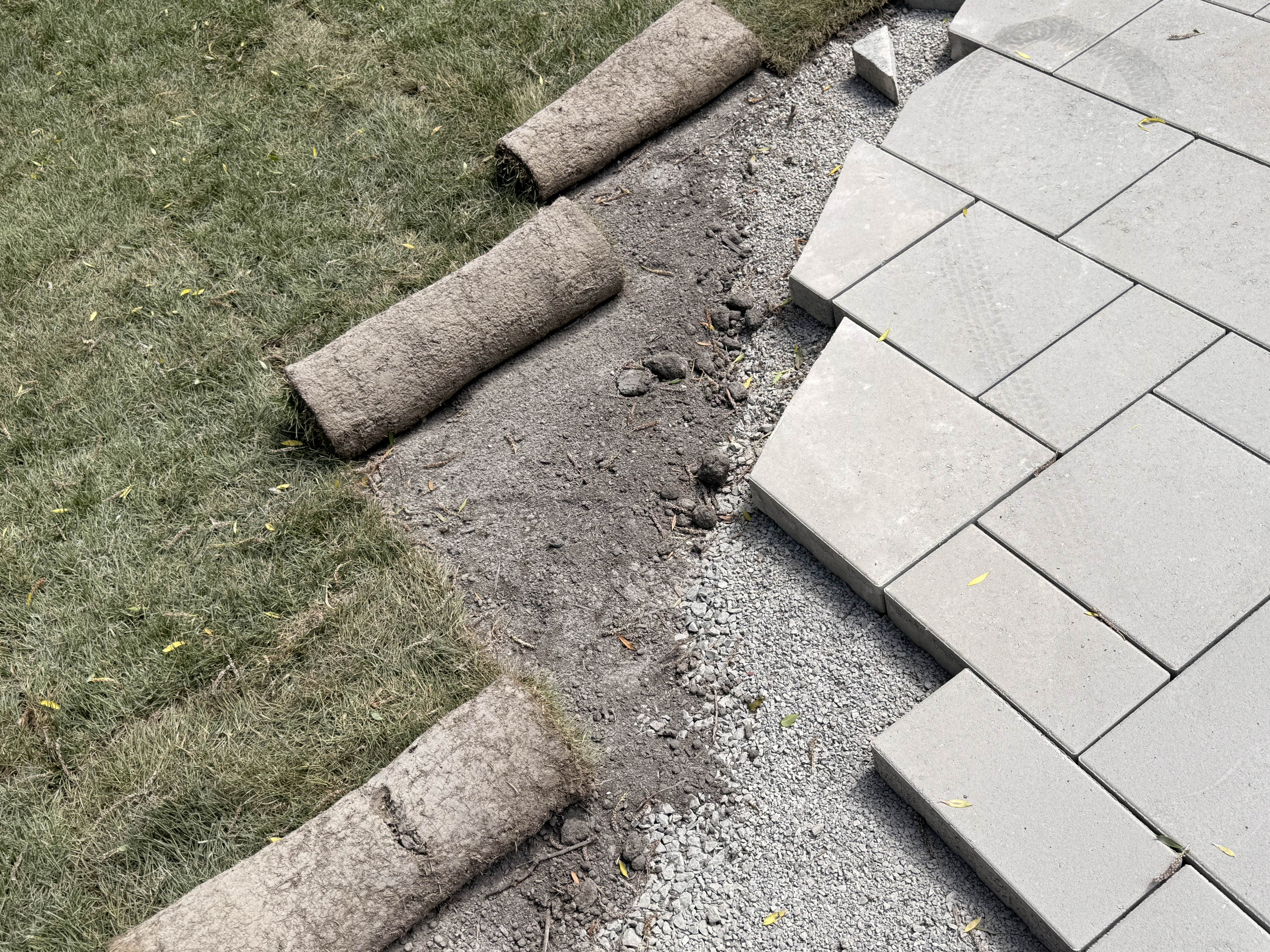
Choosing the right lawn surface affects how you use your outdoor space, how much time and money you spend maintaining it, and how well it holds up over time. Whether you have children, pets, drainage concerns, or a yard that sees heavy foot traffic, understanding the differences between these two options helps you make a more confident decision for your property.
What Is Natural Sod?
Natural sod is mature grass grown on a farm and delivered in rolls or slabs. When installed properly, it gives homeowners an established lawn within a few weeks, rather than waiting months for seed to develop.
Sod requires soil preparation before installation. The ground is graded, old grass or weeds are removed, and a suitable topsoil base is prepared to support root development. After laying, sod needs consistent watering to establish its root system, typically for two to four weeks.
Once established, natural sod requires regular mowing, fertilizing, aerating, and seasonal care. In GTA climates, sod goes dormant in winter and returns to growth in spring. It provides a natural appearance, a relatively cool surface in summer, and an authentic lawn feel underfoot.
What Is Artificial Grass?
Artificial grass is a manufactured surface designed to resemble natural turf. It is installed over a prepared and compacted base, typically consisting of crushed stone or gravel to support drainage, topped with sand or rubber infill.
Unlike natural sod, artificial grass does not require mowing, fertilizing, or regular watering once installed. It maintains a consistent green appearance throughout the year, regardless of season, weather, or sunlight conditions.
Artificial grass works well in backyards, side yards, pet areas, shaded zones where natural grass struggles to grow, and high-traffic play spaces. Product quality varies considerably, so choosing a durable, UV-stable product with proper drainage capacity is important for long-term performance.
Appearance and Feel
Natural sod provides a living, textured surface that changes with the seasons. In spring and early summer, a well-maintained lawn has a rich, deep green appearance. In dry summers or during dormancy, it may lighten or thin without proper watering and care.
Artificial grass maintains a consistent look year-round. Modern products have improved significantly in texture, colour variation, and blade structure, and higher-quality options can closely resemble natural turf. Lower-cost products may look more synthetic or fade over time with UV exposure.
The feel underfoot is different between the two. Natural grass is softer and cooler, especially when recently mowed. Artificial grass provides a consistent, even surface, though it can become warm in direct sunlight during summer afternoons.
Maintenance Requirements
Natural sod maintenance involves a regular schedule of tasks throughout the season. This includes:
- Watering two to three times per week during dry periods
- Mowing every one to two weeks during the growing season
- Fertilizing two to four times per year
- Aerating once or twice annually to improve soil health
- Overseeding thin or worn areas as needed
- Applying weed control throughout the season
- Repairing damaged or patchy sections
- Clearing leaves and debris in fall
Artificial grass requires less ongoing maintenance, but it is not maintenance-free. Fibres should be brushed periodically to keep them upright, especially in high-traffic areas. Leaves and debris need to be removed regularly. Pet areas require rinsing and cleaning to manage odour and bacteria. Infill levels should be checked and topped up as needed, and some properties benefit from occasional professional cleaning.
For homeowners who want a lower-maintenance outdoor space, artificial grass reduces the time commitment significantly compared to a natural lawn.
Upfront Cost and Long-Term Cost
Natural sod generally has a lower upfront material and installation cost than artificial grass. The cost of sod itself, combined with soil preparation and labour, is typically more accessible as an initial investment.
However, natural sod creates ongoing costs over time. These include watering (which affects water bills during dry GTA summers), lawn care tools and equipment, fertilizer and lawn treatments, and the cost of repairing or reseeding worn areas.
Artificial grass usually costs more to install initially. Material costs, base preparation, excavation, and professional installation represent a larger upfront investment. That said, artificial grass can reduce or eliminate many of the ongoing maintenance expenses associated with natural sod over its lifespan.
Long-term value depends on how heavily the space is used, the quality of the installation, the product selected, and how long the homeowner plans to keep the surface. Costs vary by project, so getting a detailed quote based on your specific yard size and site conditions is worth doing before deciding.
Durability and Everyday Use
Natural grass can become muddy, worn, or patchy in heavily used areas. Backyard sections near patio access points, play areas, or high-traffic paths often develop bare patches over time, especially in wet seasons or shaded spots.
Artificial grass provides a consistent surface regardless of foot traffic. It does not become muddy, and heavy use does not create bare spots the way natural sod does. This makes it a practical choice for outdoor entertaining areas, children's play zones, and backyards that see frequent activity.
For outdoor furniture, artificial grass holds up well under furniture legs and does not create divots the way soft natural sod might in wet conditions. Natural grass recovers from moderate use when given time and care, but in shaded yards, recovery is slower and lawn quality often declines without adequate sunlight.
Pets
Natural sod is a familiar surface for most pets. However, dogs in particular can dig through sod, create yellow spots from urine, and wear tracks into the grass along fence lines or favourite routes.
Artificial grass does not discolour from urine, and dogs cannot dig through it easily. However, proper base preparation and drainage are especially important for artificial grass used by pets. Without adequate drainage, pet urine can pool below the surface, creating odour problems over time.
Important for pet owners: Choosing a pet-friendly turf product and ensuring proper drainage installation are both critical. Regular cleaning, rinsing the surface with water, and selecting an appropriate infill that supports drainage and odour control will keep the surface performing well long term.
Children and Family Use
Both surfaces can work well for families, but they have different characteristics. Natural grass is cool underfoot, soft to land on, and free from synthetic materials. Children can run, play, and dig on it naturally. The main drawbacks for active families are mud in wet weather and the recovery time required after heavy use.
Artificial grass offers a consistently clean, even surface that does not get muddy. Children can use the space immediately after rain without tracking debris indoors.
Artificial grass can become noticeably warmer than natural grass during direct summer sunlight, particularly in the afternoon. This is worth considering for play areas used by young children during hot weather. Natural grass generally remains cooler underfoot because the living surface releases moisture naturally.
If chemical treatments such as fertilizers, herbicides, or pesticides are applied to natural sod, it is important to follow label instructions and allow the appropriate waiting period before children and pets return to the lawn.
Drainage and Grading
Both natural sod and artificial grass require proper drainage to perform well and avoid long-term problems.
For natural sod, the underlying soil quality, grading, and water movement through the yard all affect how well the lawn establishes and drains. Poor grading causes water to pool on or around the lawn, which damages roots and creates soggy conditions. Proper soil preparation and grading before installation is essential.
For artificial grass, drainage is built into the base design. Installation typically involves excavating the existing soil, compacting a crushed stone or gravel drainage layer, and then installing the turf surface on top. The surface is sloped slightly to allow water to move toward drainage points, and proper installation around structures like patios, retaining walls, or fence lines ensures water moves away rather than pooling.
Poor preparation for either option can cause water pooling, uneven settling, soil movement under the surface, or premature failure of the installation. Working with an experienced contractor and ensuring proper grading before installation reduces these risks significantly.
GTA Weather and Seasonal Conditions
GTA weather includes cold winters, spring thaw, rainy periods, and dry summer stretches. Both surfaces must be able to handle these conditions reliably.
Natural sod goes dormant in winter and returns in spring. Spring thaw can create muddy conditions before the lawn firms up. Dry summer periods stress natural lawns and increase water requirements. Freeze-thaw cycles in late fall and early spring can heave soil and affect the roots of newly established sod.
Artificial grass holds up well in winter conditions. Snow can be removed with a plastic shovel or allowed to melt naturally. Freeze-thaw cycles do not damage a properly installed artificial turf system in the same way they can affect natural lawns. However, installation quality matters: a well-compacted, properly drained base is essential in GTA conditions to prevent heaving or shifting over multiple winters.
Environmental Considerations
Both options have environmental characteristics worth understanding before making a decision.
Natural sod is a living surface. It can absorb and filter rainwater, support soil biology, provide cooling through moisture release, and contribute to a healthier local ecosystem. However, it typically requires regular watering, and some homeowners use fertilizers, herbicides, or other treatments that can affect surrounding soil and water.
Artificial grass reduces watering and eliminates the need for mowing (reducing fuel consumption for gas-powered mowers) and fertilizer application. However, it is a manufactured material made from plastics, and it does eventually need to be replaced, typically after 10 to 20 years depending on product quality and use. Artificial grass surfaces can also become warmer than natural turf, contributing to localized heat on hot days.
Neither option is universally more environmentally friendly. The best choice depends on the specific property, how water is sourced, what lawn care practices are used, and how long the homeowner plans to maintain the surface.
Which Is Better for a Front Yard?
Natural sod remains the most common choice for front yards in residential GTA neighbourhoods. It provides a familiar, traditional lawn appearance that is consistent with surrounding properties and meets the expectations of most neighbourhood streetscapes.
Some municipalities or homeowner associations may have guidelines about front yard landscaping, including restrictions on artificial turf. Before installing artificial grass in a front yard, it is worth confirming local requirements and any applicable by-laws.
Artificial grass can work well for front yards in low-maintenance designs, particularly for properties with awkward slopes, limited sunlight, or very narrow grass strips that are difficult to maintain. Choosing a high-quality product that closely resembles natural turf improves curb appeal.
Which Is Better for a Backyard?
For backyards, the right choice depends on how the space is actually used. If the yard sees heavy activity from children and pets, receives variable sunlight, has existing drainage challenges, or you want to minimize ongoing maintenance, artificial grass is worth a serious look. If you prefer a natural lawn, enjoy the process of lawn care, have a well-draining yard with good sunlight, and want a lower upfront cost, natural sod is a strong option.
Lifestyle, budget, how long you plan to stay in the home, sunlight levels, drainage conditions, and personal preference all factor into the decision. There is no single right answer across all properties.
Can You Combine Sod and Artificial Grass?
Yes. Many homeowners use a combination of both surfaces across different areas of their property. Common approaches include:
- Natural sod for the main lawn with artificial grass in a shaded side yard or pet run
- Artificial grass installed around interlocking patios or walkways for a cleaner transition
- Turf in a designated high-traffic play area with natural grass elsewhere
- A mix of grass, interlock, planting beds, and outdoor living areas tailored to the yard's shape and use
A combination approach allows homeowners to prioritize natural grass where it performs well and use artificial grass where conditions make natural turf difficult to maintain.
Questions to Ask Before Choosing
- How much maintenance am I willing to do on a regular basis?
- Does the yard receive enough sunlight to support natural grass?
- Will children or pets use the lawn area regularly?
- Are there current drainage issues in the yard?
- How heavily will the lawn be used week to week?
- What is the budget for installation, and what ongoing costs can I accommodate?
- Do I prefer the look and feel of a natural lawn, or is a consistent year-round appearance more important to me?
- How long do I expect the surface to last before replacement?
- Are there any municipal or property-level restrictions that affect my choice?
Final Thoughts
Natural sod provides a familiar, living lawn surface with a lower upfront cost. It requires regular seasonal care and performs best with adequate sunlight, good drainage, and consistent maintenance. Artificial grass provides a lower-maintenance alternative with a consistent appearance year-round and no mowing, fertilizing, or regular watering. It costs more to install initially but can reduce ongoing maintenance time and expense over the long term.
Proper grading and base preparation are essential for both options. The right choice comes down to how you use your outdoor space, whether you have children or pets, your sunlight and drainage conditions, your budget, and your long-term priorities for the property.
Greatland Construction provides sod installation, artificial grass installation, landscaping, interlocking, patios, fencing, drainage improvements, and complete outdoor living renovations across the GTA. If you are comparing options for your yard, our team can review your site conditions, answer your questions, and help you choose the approach that fits your home and your lifestyle.